Artificial intelligence will transform the field of resource planning—from operational routines to strategic intelligence. Resource planning has traditionally been a deeply human profession. Planners find themselves at the intersection of competing interests—project managers who need the right people, department managers who oversee their teams, and a management team who demand data, insight, and certainty.
Day after day, planners juggle spreadsheets, inboxes, and phone calls, keeping the organization together through experience, intuition, and perseverance. That’s about to change. Not because planners will soon be redundant—but because they’ll have a highly capable new colleague.
Meet Tim: your AI planning agent
Imagine a new team member starts in the planning department. Just like any other colleague, you can simply talk to them: “Can you move all the bookings for Project X to next week?” or “Are there any conflicts in Department C in the next seven days?” Tim answers immediately, asks the right follow-up questions, and takes care of it — while you stay in control of every decision.
Tim is Timewax’s AI planning agent. Tim has a voice, an avatar, and a conversational style that feels natural. You don’t have to learn a new system or navigate complex menus. You simply talk—just like you would with a colleague.
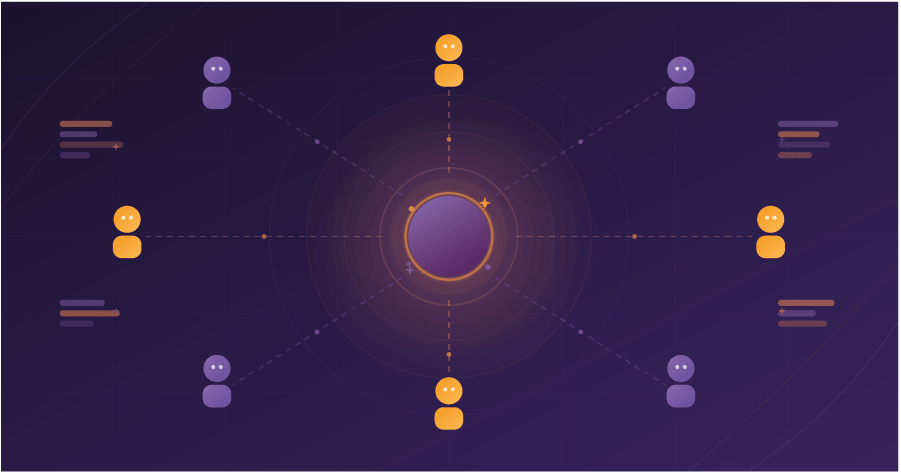
But Tim isn’t the same as any other human colleague. While a human planner handles one conversation at a time, Tim can simultaneously support hundreds of users in your organization—project managers requesting resources, department heads reviewing schedules, operations managers requesting forecasts. Tim never sleeps, never loses track, and never gets overwhelmed.
The result is a planning process that is always responsive, always consistent, and always available.
Operational quality: doing the daily work well
At the operational level, resource planning is full of repetitive, time-sensitive tasks. Scheduling a resource for a project, rescheduling a booking when priorities shift, canceling capacity that’s no longer needed, and resolving conflicts when two projects require the same person. All these tasks require checking availability, confirming details, and involving the right people—all of which consume time planners could have spent on more strategic work.
Tim handles all of this conversationally. A project manager asks if a Java developer is available for four hours on Wednesday. Tim checks availability, filters by skill, suggests candidates, and books the appointment as soon as it’s confirmed. If a conflict arises—say, Adam is double-scheduled for two projects—Tim proactively identifies it, explains the situation, and offers concrete solutions.
What’s changing here isn’t just the speed, but the scope. Today, a planner can only handle a limited number of requests per day. With Tim, everyone in the organization who needs planning support gets an immediate, intelligent response—without the planner becoming a bottleneck.
Tactical intelligence: optimizing what humans can’t
This is where it gets truly transformative.
When human planners allocate resources, they typically optimize for one or two variables at a time—who is available, who has the right skills? The cognitive load of simultaneously balancing five, six, or seven variables across dozens of projects and hundreds of people simply exceeds human capacity. This means that, despite their best efforts, planners regularly leave value on the table.
Tim doesn’t have that problem.
When Tim is asked to optimize the planning of a department or project, he can simultaneously take into account:
- Skills and role — matching the right expertise to every booking
- Client and Project Awareness — Prioritize resources who have previously worked for the client or on the project, reducing onboarding time
- Location — Assign resources who live close to the project location to reduce travel costs
- Margin — for fixed price activities, choose resources whose cost price is most favorable for the project margin
- Internal over external — leverage internal capacity before turning to external forces
- Deadlines — ensuring activities are filled before the deadlines in the schedule are reached
In addition to multi-variable optimization, Tim applies two fundamental principles that are difficult to enforce manually in practice. First, avoid multitasking. When people divide their attention across multiple projects simultaneously, productivity decreases and lead times increase. Tim schedules people so that they focus on one project at a time and complete work before moving on.
Second, schedule the big projects first. Just as you fill a pot with large rocks before adding sand, Tim ensures that the highest-priority projects with the greatest capacity demands are scheduled first—so that smaller jobs fill the remaining slack instead of crowding out the larger projects. The result is a schedule that is not only achievable but truly optimized—something never possible at scale with human planning alone.
Strategic insight: planning as a competitive advantage
In addition to daily operational work and tactical planning issues, there is a third dimension where AI creates entirely new possibilities: strategic intelligence.
Resource planning generates vast amounts of data—on how capacity is utilized, where bottlenecks arise, how project demand fluctuates, and how planning decisions impact outcomes like margin, delivery time, and customer satisfaction. Today, most of this data lies unused, visible only if someone has the time to compile a report.
With an AI planning agent, that fundamentally changes. Tim can calculate what-if scenarios: What happens to our capacity if we win Project Y? How does hiring two senior consultants in Department B change our capacity for the coming quarter? Which projects are at risk of missing their deadlines based on current staffing levels? These are questions strategic management needs answers to—and which currently require significant manual analysis.
At this level, AI doesn’t just support planning. It transforms planning into a source of competitive advantage.
The new role of the planner: director instead of executor
It would be a mistake to read all this and conclude that human planners are on their way out. The opposite is true—but their role is changing dramatically.
Don’t view Tim as a replacement, but as a capable employee working under the planner’s supervision. The planner sets the priorities: which optimization variables are most important for this department, which preconditions are non-negotiable, and which decisions require human judgment. Tim executes within these parameters, handles the volume, and identifies exceptions that require a human eye.
This relationship can also be directly with an operations manager or department head, depending on the organizational structure. The point is that there’s always a human being in the chain—someone who sets the goals, evaluates the outcomes, and takes responsibility for the decisions. Tim strengthens that person’s capacity; it doesn’t replace their judgment.
In practice, this means planners can break free from the operational grind and focus their energy where human insight truly makes the difference: building relationships with project managers and department heads, navigating complex organizational dynamics, and contributing to the strategic conversations that shape the company’s direction.
A new era for resource planning
Resource planning has long been an underrated function—essential to organizational health, yet often invisible until something goes wrong. AI is changing that.
With Tim as a digital colleague, resource planning becomes faster, smarter, and more strategic. Operational tasks are handled conversationally at scale. Tactical optimization considers variables that are difficult for humans to manage simultaneously. Strategic forecasting thus evolves from an occasional luxury to a structural competence.
Those organizations that embrace this shift first will gain a real advantage: better margins, faster delivery, and a planning function that finally opertes at the speed and intelligence their businesses demand. Tim is ready. The question is, are you ready? Timewax is building the next generation of resource planning—powered by AI, guided by people.