With AI coding assistants, you can build a planning tool that looks surprisingly good in a single afternoon. An overview of employees, a few projects, hours you can drag and drop: it works. No wonder more and more organizations are wondering why they should still pay for a planning software subscription.
That is a valid question, and the honest answer is: it depends. In this blog, we list the pros and cons of building your own with AI, show why planning is a particularly tricky domain, and provide a few questions to help you make the trade-off yourself.
What building your own with AI delivers
Let’s start with what is actually good about building it yourself, because those benefits are real. The biggest is customization: your own tool aligns exactly with your way of working, your terminology, and your reporting. You don’t have to adapt your process to a vendor’s logic.
Additionally, it’s fast. A first working version is up in days instead of months, which is valuable for gathering feedback from planners. There are no license fees per user, and the data, logic, and roadmap are entirely yours.
Finally, building it yourself generates knowledge. Teams experimenting with AI quickly learn what is technically possible. That knowledge is also useful elsewhere in the organization.
Where it gets tricky
AI lowers the barrier to building software, but not the cost of owning software. That’s the difference between a successful prototype and a tool an organization can run on for years.
It starts with the edge cases. A demo works with ten employees and three projects. In practice, you deal with part-time contracts, leave, holidays, and projects that change shape halfway through. The first 80 percent goes fast; the last 20 percent takes the most work.
Then comes maintenance, and that never stops. AI writes code, but someone has to understand, test, and fix that code when something goes wrong. Often, that knowledge resides with a single colleague. If they leave, you’re left with a system that no one dares to modify.
Security and integrations also require ongoing attention. Planning data contains personal information such as availability and leave, so access rights, logging, backups, and GDPR are not side issues. And planning rarely stands alone: HR, time tracking, ERP, and calendars must connect to it, while those systems themselves also change.
Finally, there are the hidden costs. License fees are visible in the budget; the hours of your own people often are not. Count the time of developers, key users, and administrators honestly, and ask yourself what those people could have done instead. Moreover, ease of use and adoption require years of listening to users, not a single sprint.
Why planning is a particularly difficult domain
Not all software is equally difficult to build yourself. A form or a simple overview is doable. Resource and capacity planning belongs to the more difficult category because so many moving parts come together.
Multiple projects demand the same people at the same time. Furthermore, those people are not interchangeable: skills, certifications, location, and contract hours determine who can be deployed where. And the schedule changes constantly. A client shifts a date, someone gets sick, a quote is awarded, and the rest of the schedule shouldn’t collapse as a result.
On top of that, every role wants to see something different. The resource manager looks for the big picture, the project lead for their project, the employee for their own week, and management for utilization and forecasting. The most valuable features, such as what-if scenarios and weighing new assignments against available capacity, are also the most complex.
Optimizing a schedule isn’t done with a language model
Those who build a planning tool themselves with AI often let a language model (LLM) create the schedule itself. That seems logical, but there is a major pitfall here. Good planning software calculates using algorithmic optimization models: mathematical solvers that never break hard rules and look for the best solution within those rules.
A language model works differently. It predicts the most likely text and doesn’t check if all rules are met simultaneously. As long as there are few rules, it goes fine. As soon as rules interact—such as availability, skills, deadlines, and the prohibition of double booking—it goes wrong. Research into planning tasks shows that even the strongest models drop off significantly as soon as different types of constraints come together. According to another benchmark, the share of valid schedules drops from 97 percent for simple problems to less than 2 percent for complex ones.
That doesn’t mean language models are useless for planning. They are excellent at understanding a question in plain language, explaining conflicts, and preparing choices. The power lies in the combination: the language model as a conversational partner, the optimization model as the calculator. Building that combination well requires specialist knowledge of both worlds.
What a vendor brings: domain knowledge, data, and innovation
A specialized vendor doesn’t just build software; they also accumulate years of knowledge about the planning profession. Every customer brings new challenges from different industries and with different ways of working. Those lessons are embedded in how the product works, often in places you only appreciate if you had to figure them out yourself.
With the rise of AI, that advantage grows. AI only becomes truly smart when it learns from large and varied data. A vendor can—anonymized and within customer agreements—see patterns across many organizations: how long similar projects actually take, where capacity is structurally lacking, and which schedules prove feasible. A self-built tool only learns from the data of one organization.
As a result, the AI in specialized software generally improves faster than what you can train yourself. Building your own with AI gives you the technology, but not the experience and data that make that technology valuable.
Moreover, the profession itself isn’t standing still. Specialized vendors invest continuously in AI, from smart suggestions for staff deployment to assistants that independently prepare schedules and resolve conflicts. The planning domain is going to make big strides in the coming years.
As an organization, you want to ride that wave of development, not try to keep up with it yourself. Those who build their own must research, develop, and maintain every new possibility themselves, while their own tool quickly falls behind. Those who use standard software get that innovation with every update and can deploy their own people on the work where the organization truly excels.
When building your own is actually wise
Building your own isn’t always the wrong choice. For a simple need, such as a small team at one location without integrations, a lightweight custom solution or even a good spreadsheet will suffice.
It can also make strategic sense if your way of planning is truly your competitive advantage and you have a dedicated development team that can manage the tool for years. Additionally, a quickly built tool is a great prototype to sharpen your requirements before selecting a standard package.
The most interesting route is often a combination: a standard package as a stable foundation, and using AI to build what goes on top. Think of custom reporting, an integration, or an assistant via the API.
A decision tree for your own assessment
In doubt? Go through the five questions below honestly. Only those who answer yes to all five have a strong argument for building their own.
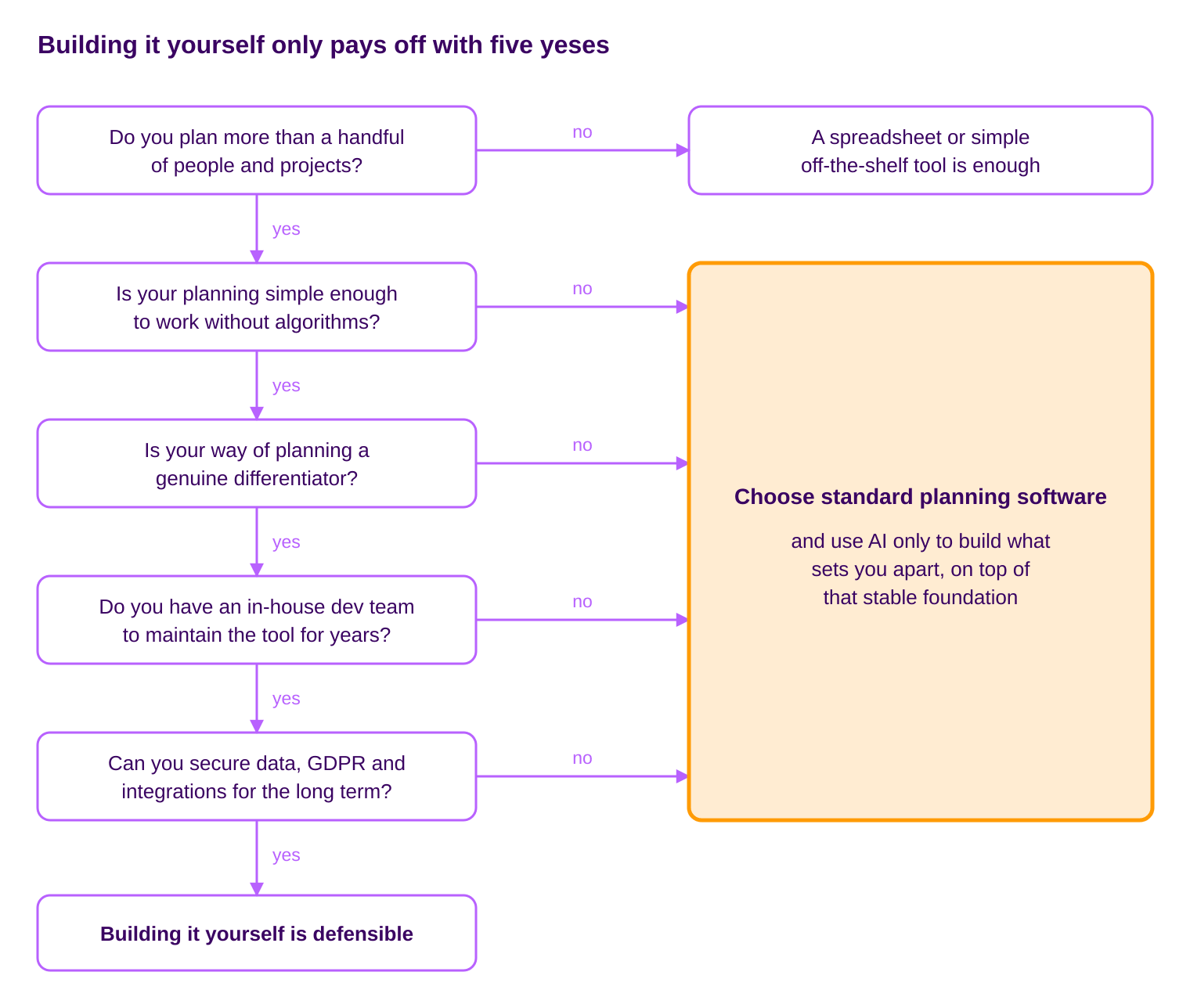
Figure 1: decision tree · 5 questions, 3 outcomes
Additionally, calculate the total costs over three to five years, not just the build. Include the hours of your own people, management, hosting, security, and the costs of downtime, and put that next to the license fees in your budget.
Conclusion: build where you differentiate, buy where you don’t
AI has made building your own more accessible than ever, and that’s good news. But the question isn’t whether you *can* build a planning tool. The question is whether you want to own, secure, integrate, and further develop it for years to come.
For most organizations, planning is a critical process, but not a product they want to make themselves. In that case, standard planning software as a foundation makes more sense: proven, secure, and immediately deployable for all users. Then use AI where it really makes a difference, for example for custom analyses, integrations, or smart assistants on top of that foundation.
This way, you benefit from the speed of AI without your own people having to become a software vendor.